

How To Build A Simple, Effective Skincare Routine
The internet has made skincare routines far more complicated than they need to be. This guide cuts through the noise with a clear, buildable framework, morning, evening, and everything in between.
Somewhere between the ten-step Korean routines, the TikTok active stacking trends and the dermatologist-approved minimalism, the actual question, what does my skin actually need, has become surprisingly hard to answer.
The answer is almost always simpler than the internet suggests. This guide gives you the framework, a clear, ordered approach to morning and evening routines that provides everything the skin needs without unnecessary complexity. Start here, build slowly, and add only when you genuinely need to.
The Four Principles
Regardless of skin type, concern or budget, an effective skincare routine is built on four functions: cleanse, treat, hydrate and protect. Everything else is an extension of these four.
- Cleanse: Remove what should not be on the skin, pollution, SPF, makeup, excess sebum, product residue from the previous routine.
- Treat: Address specific concerns, pigmentation, lines, acne, congestion, with targeted active ingredients.
- Hydrate: Maintain the skin's water content and support barrier function with humectants and moisturisers.
- Protect: Shield against the primary driver of visible ageing, UV radiation, with broad-spectrum SPF.
The Morning Routine: Defend and Protect
The primary job of your morning routine is protection. During the day, the skin faces UV radiation, environmental pollutants, infrared light and ozone, all of which generate free radicals and drive visible ageing. Your morning products should build towards SPF as the essential final step.
Step 1: Cleanse
A gentle, low-surfactant cleanser in the morning removes the overnight accumulation of sebum, sweat and any residue from your evening products. If you have dry or sensitive skin, consider a cream or milk cleanser. If your skin is oily or congested, a gel formula may be more appropriate.
Morning cleansing should be brief and gentle. Use lukewarm water, never hot, which strips barrier lipids, and avoid mechanical exfoliation in the morning if you are using actives at night.
Step 2: Antioxidant Serum
After cleansing, a Vitamin C serum applied to clean skin provides antioxidant protection throughout the day. Applied beneath SPF, it delivers demonstrably greater photoprotection than SPF alone by neutralising the free radicals that penetrate even correctly applied sunscreen.
If your skin is not yet ready for a Vitamin C serum, or if you have specific concerns about irritation, a Niacinamide serum is an excellent starting point, it supports barrier function, regulates sebum and addresses pigmentation without the pH requirements of L-Ascorbic Acid.
Step 3: Moisturiser
A moisturiser suitable for your skin type, lighter for oily or combination skin, richer for dry, seals the serum layer and provides emollient support for the barrier. If your moisturiser contains SPF, check the stated protection level: for daily UK use, minimum SPF30 is the standard.
Step 4: SPF (Non-Negotiable)
Broad-spectrum SPF30 minimum, applied as the last step of your morning routine. No caveats, no exceptions. UV radiation is the primary driver of visible skin ageing and the primary cause of skin cancer. A dedicated SPF product used correctly provides better protection than SPF built into a moisturiser, because it is applied in the right quantity without being diluted by layering.
The Evening Routine: Repair and Restore
The evening routine prioritises repair. During sleep, cellular renewal accelerates, growth hormone peaks and the skin is no longer defending against UV. This is the optimal window for active ingredients that target specific concerns.
Step 1: Double Cleanse (if wearing SPF or makeup)
If you have worn SPF, makeup or both during the day, double cleansing is the most effective approach. The first cleanse, with a cleansing oil, balm or micellar water, dissolves SPF, makeup and sebum that water-based cleansers cannot remove reliably. The second cleanse completes the job and prepares skin for treatment.
If you have not worn SPF or makeup, a single gentle cleanse is sufficient. Do not over-cleanse: every cleanse temporarily disrupts the barrier, and the skin needs adequate time to restore it.
Step 2: Treatment
The treatment step is where you address specific concerns. This might be a retinol for anti-ageing and cell renewal, an AHA (glycolic or lactic acid) for texture and pigmentation, a niacinamide serum for sebum regulation, or a dedicated treatment for acne. Not all of these in the same routine, choose the one most relevant to your primary concern and build from there.
Beginners should start with nothing in the treatment step. Use the routine without any active for two to four weeks, allow your skin to adjust, then introduce one treatment product at the lowest available concentration.
Step 3: Hydrate and Seal
After your treatment step, apply a hyaluronic acid serum to damp skin if you need additional hydration, followed by your moisturiser to seal everything in. Evening moisturisers can be richer than morning formulas since they do not need to sit under SPF or feel comfortable for daytime wear.
Matching the Routine to Your Skin Type
The framework above works for all skin types, the variables are product selection within each step, not the structure itself.
- Dry skin: Use a cream cleanser, a richer HA serum with occlusive elements, a heavier moisturiser and a physical or mineral SPF. In your treatment step, prioritise hydrating actives before corrective ones.
- Oily or acne-prone skin: Use a gel or foam cleanser, a lightweight niacinamide serum, a non-comedogenic moisturiser and a chemical SPF. In your treatment step, consider BHAs (salicylic acid) before retinol.
- Sensitive or reactive skin: Strip back to the minimum, gentle cleanser, simple moisturiser, mineral SPF. Add no actives until the skin is consistently calm and non-reactive for at least two weeks.
- Combination skin: You may find you need to treat different areas differently, a richer moisturiser on dry zones, a lighter formula on oily areas. This is normal and requires no special products, just mindful application.
The Over-Complication Problem
More is not better in skincare. The most common barrier to seeing results is not using too few products, it is using too many, changing too often, and never giving any single product enough time to demonstrate its effect.
Skin requires four to six weeks to complete one full renewal cycle. Most active ingredients require eight to twelve weeks of consistent use to deliver measurable results. If you are changing your routine every three weeks based on how your skin looks immediately after application, you are not giving it the consistency it needs to respond.
Frequently Asked Questions
How many products do I actually need in a skincare routine?
For most people, a functional morning routine needs four products: a cleanser, an antioxidant serum, a moisturiser and an SPF. An evening routine needs three to four: a cleanser (or double cleanse), a treatment (retinol, AHA or targeted serum), and a moisturiser. That is seven or eight products covering both routines, everything beyond that is optional.
Should I cleanse in the morning if I cleansed the night before?
Yes, but gently. During the night, sebum, sweat and any product residue accumulate on the skin surface. A gentle, low-surfactant cleanser in the morning removes this without stripping. If you have very dry or sensitive skin, micellar water or a rinse with water alone may be sufficient.
When should I introduce actives like retinol or AHAs?
Only once the basics are established. Your skin should be comfortable, non-reactive and well-moisturised before you add actives. For most people this means two to four weeks of cleanse-moisturise-SPF before introducing any treatment step.
Does the order of products matter?
Yes. The general rule is lightest to heaviest texture, with water-based products before oil-based and SPF last in the morning. This ensures that lighter-molecule actives (serums, HA) reach the skin before heavier products create a barrier layer.
Can I use the same routine year-round?
Your core routine can remain consistent, but most people find adjustments helpful across seasons. In winter, add a richer moisturiser and consider adding an HA serum. In summer, you may find a lighter moisturiser sufficient and should consider a dedicated SPF step if your regular moisturiser does not include one.
Do I need to use eye cream separately?
Not necessarily. If you are using a gentle moisturiser formulated for sensitive skin, it is often appropriate for the eye area too, apply with the ring finger using light tapping motions. Dedicated eye creams add value for specific concerns like dark circles or puffiness, but they are not a required step in a basic routine.
More from The Bay Blog
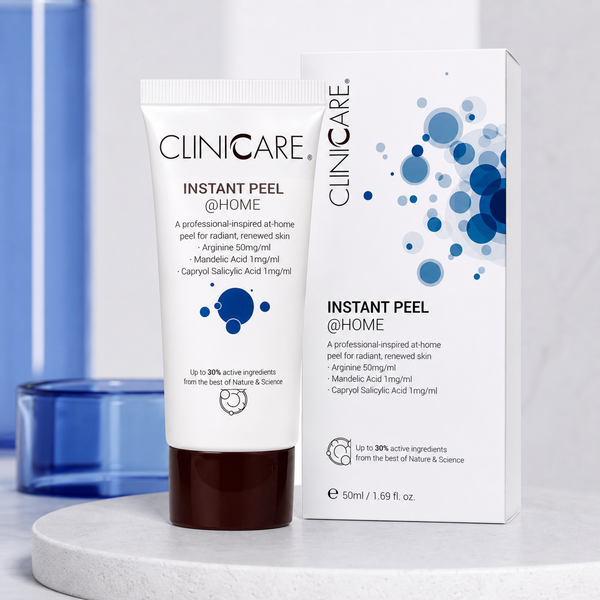 IngredientsWhat Is an At-Home Peel? ClinicCare Instant Peel @ Home, Explained
 Expert GuidesYour Best Anti-Ageing Product Isn't a Serum. It's SPF.
 Skin ConcernsPhyto Corrective with PDRN: How to Calm Redness and Sensitive Skin