

Hydration Starts Here: Understanding Hyaluronic Acid
Not all hyaluronic acid is the same. Molecular weight determines where it works and how. This guide explains the science, the common mistakes and the correct way to layer for lasting hydration.
If there is one ingredient that has crossed from professional skincare into universal use without losing its scientific credibility, it is hyaluronic acid. It is in serums, moisturisers, eye creams, sheet masks, injectables and even food supplements. And yet, despite its ubiquity, it is consistently misunderstood and misapplied.
Understanding hyaluronic acid properly, what it actually is, how molecular weight changes what it does, and the specific conditions under which it works, takes only minutes and makes an immediate practical difference to how your skin responds to it.

What Is Hyaluronic Acid?
Hyaluronic acid is a glycosaminoglycan, a long, chain-like sugar molecule produced naturally by the body. It is found in the highest concentrations in skin, connective tissue and the vitreous humour of the eye. In skin, it forms part of the extracellular matrix, the structural network that gives tissue its volume, resilience and moisture-holding capacity.
As a humectant, hyaluronic acid has an extraordinary ability to attract and retain water. A single gram of hyaluronic acid can bind up to approximately six litres of water. In the dermis, this capacity is what gives young skin its characteristic plumpness and bounce.
From the mid-twenties onwards, the body's natural HA production declines and the concentration in the dermis falls progressively. By the time skin begins to show visible ageing, its HA content has already been reducing for years.
Why Molecular Weight Changes Everything
Hyaluronic acid exists naturally in a high molecular weight form, very long chains with a molecular weight of 1-2 million Daltons. The skin's barrier prevents most molecules this size from penetrating, meaning high-MW HA stays on the skin's surface.
Scientific advancement in HA fragmentation has produced lower molecular weight forms that penetrate progressively deeper into the epidermis and dermis. Understanding what each does is essential to evaluating any HA product:
- High molecular weight (1,000-2,000 kDa): Stays on the skin surface. Creates a visible plumping, smoothing effect, the 'instant hydration' that many people associate with HA. Forms a moisture-retaining film. Does not penetrate.
- Medium molecular weight (100-300 kDa): Penetrates the outer epidermis. Provides deeper humectant activity and supports the stratum corneum's water-holding capacity.
- Low molecular weight (10-50 kDa): Reaches the deeper epidermis and potentially the upper dermis. Supports longer-term hydration and may interact with cells that regulate HA synthesis.
- Ultra-low / nano HA (under 10 kDa): The deepest-penetrating forms. Some research suggests interaction with dermal fibroblasts. Also the most likely to trigger inflammatory pathways in compromised skin, use with caution if barrier function is impaired.

Dehydrated Skin vs. Dry Skin: The Distinction That Matters
Dry skin and dehydrated skin are frequently conflated, even in professional settings. They are not the same thing, and the distinction determines which products actually help.
Dry skin is a skin type, determined largely by genetics and sebum production. Dry skin lacks oil, it produces insufficient sebum to maintain the lipid layers of the barrier. It tends to feel tight, look dull and react easily to environmental conditions. It requires emollient and occlusive ingredients to compensate for reduced lipid production.
Dehydrated skin is a temporary condition, a lack of water in the skin. It is not a skin type, and any skin type can experience it, including oily skin. Dehydrated skin shows fine surface lines, a crepey texture, dullness and a feeling of tightness that is not relieved by oil-based moisturisers. It responds primarily to humectants, of which hyaluronic acid is the most effective available.
If you have oily skin that still feels dehydrated, you likely have a barrier function issue and need more humectant hydration, not more oil. If you have dry skin, you need both: HA for water content and an emollient or occlusive to provide the lipids your skin is not producing adequately.
How to Apply Hyaluronic Acid Correctly
This is where most people go wrong, and it is a simple fix. Hyaluronic acid is a humectant, it draws moisture toward itself from its environment. In a bathroom with low humidity (common in winter or in centrally heated spaces), there may not be enough moisture in the surrounding air for it to draw from.
The solution: apply hyaluronic acid to damp skin, immediately after cleansing. While the skin is still slightly wet, apply your HA serum and allow it to absorb while the surface moisture is still present. Follow immediately with a moisturiser to seal the hydration in.
- Cleanse with lukewarm water (not hot, hot water strips barrier lipids).
- Pat skin 80% dry, leave it slightly damp.
- Apply hyaluronic acid serum to the damp surface.
- Allow 60 seconds for absorption.
- Apply moisturiser immediately to seal.

The Biggest Layering Mistakes
Beyond the damp-skin application error, these are the most common mistakes with hyaluronic acid use:
- Using HA without a moisturiser on top. Without an occlusive or emollient seal, the water drawn to the surface by HA will evaporate. The moisturiser is not optional.
- Expecting HA to replace moisturiser entirely. HA is a humectant, it manages water. Moisturisers contain emollients and occlusives that manage oils and barrier integrity. Most skin types need both functions.
- Using too many HA products in the same routine. More layers of HA does not mean more hydration. Once the skin's hydration capacity is satisfied, additional application delivers diminishing returns and can leave a tacky, uncomfortable finish.
- Storing HA serums incorrectly. HA is stable, but prolonged exposure to heat or direct sunlight can degrade it over time. Store at room temperature away from direct light.
Frequently Asked Questions
What is hyaluronic acid?
Hyaluronic acid (HA) is a naturally occurring glycosaminoglycan, a type of sugar molecule, found throughout the body, with the highest concentrations in skin, connective tissue and eyes. It is a humectant, meaning it draws water to itself. A single gram of HA can hold up to six litres of water.
Why does my skin still feel dry after using hyaluronic acid?
The most common reason is applying HA to dry skin in a dry environment. Humectants draw moisture from their surroundings, if there is no moisture available in the environment or in the skin below, they can actually draw water from the dermis toward the surface, where it evaporates. Always apply HA to damp skin and seal with a moisturiser immediately.
What is the difference between dehydrated and dry skin?
Dry skin is a skin type, characterised by reduced sebum production. Dehydrated skin is a temporary skin condition, a lack of water in the skin, which any skin type can experience. Hyaluronic acid addresses dehydration (water loss). Dry skin additionally requires oil-based moisturisers or occlusives to compensate for reduced sebum.
Can I use hyaluronic acid with retinol?
Yes, and it is one of the most effective combinations. Apply hyaluronic acid to damp skin first, allow it to absorb, then apply retinol. The HA layer maintains surface hydration and reduces the irritation potential of retinol without blocking its absorption.
What molecular weight of hyaluronic acid is best?
The answer depends on what you want to achieve. High molecular weight HA stays on the skin's surface, creates a smooth barrier and provides immediate plumping. Low molecular weight penetrates more deeply and supports longer-term hydration within the dermis. A multi-weight formula provides both immediate surface effect and deeper support.
More from The Bay Blog
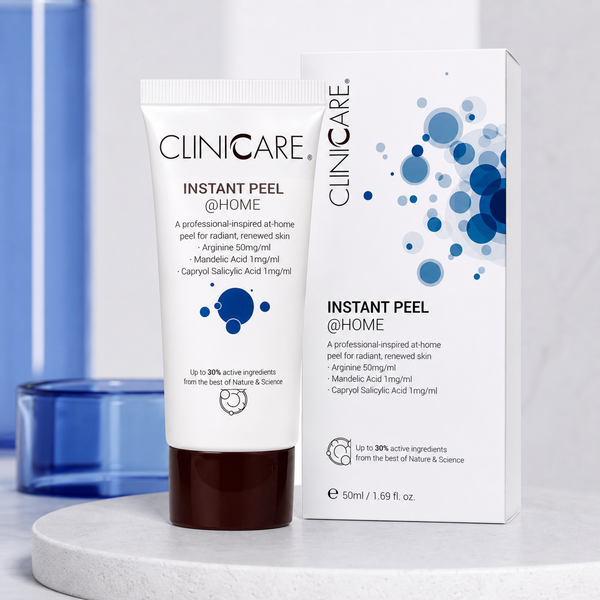 IngredientsWhat Is an At-Home Peel? ClinicCare Instant Peel @ Home, Explained
 Expert GuidesYour Best Anti-Ageing Product Isn't a Serum. It's SPF.
 Skin ConcernsPhyto Corrective with PDRN: How to Calm Redness and Sensitive Skin