

What Are Peptides? The Science Behind One of Skincare's Most Powerful Ingredients
Peptides are among the most clinically credible anti-ageing ingredients available without a prescription. But not all peptides do the same thing, and most skincare brands don't explain why. This is the definitive guide to how peptides work, which types matter, and how to use them correctly.
If Vitamin C is skincare's antioxidant champion and retinol is its cell-renewal workhorse, then peptides are its structural architects. They are the ingredient category responsible for rebuilding, the biological messengers that tell ageing skin cells to remember what they were supposed to do, and do it again.
Peptides have existed in cosmetic formulations for decades, but the category has evolved dramatically. Early peptide products were little more than marketing vehicles for ingredients that could not survive formulation. Modern peptide science is a different story: several peptide families now have double-blind, placebo-controlled clinical evidence demonstrating measurable anti-ageing efficacy that rivals some prescription-grade interventions.
Understanding what peptides are, how different types work, and how to position them within a complete routine is the difference between using them effectively and paying for product that does nothing. This guide covers all of it.
What Are Peptides?
Peptides are short chains of amino acids, the same building blocks that form proteins, but in smaller, more targeted configurations. While a full protein might contain hundreds or thousands of amino acids folded into a complex three-dimensional structure, a peptide typically contains between two and fifty amino acids linked in a specific sequence.
That sequence is everything. The order and combination of amino acids determines which receptors a peptide binds to, which cellular processes it activates or inhibits, and therefore what it does in the skin. Changing a single amino acid in the chain produces a different peptide with a different biological function, which is why the category contains such diverse subtypes.
The body produces peptides naturally throughout life. Many of the peptides used in skincare are either direct replicas of naturally occurring biological signals or synthetic analogues designed to mimic and amplify them. Because they are produced by biological processes the skin already recognises, well-formulated peptides are generally accepted without immune response, which explains their exceptional tolerability compared to more chemically aggressive actives.
How Peptides Work in the Skin
The primary mechanism by which peptides deliver their anti-ageing effects is through cell communication. Skin cells, particularly fibroblasts in the dermis, have surface receptors that respond to specific molecular signals. These signals regulate a wide range of functions: collagen synthesis, inflammatory response, melanin production, sebum regulation and the enzymatic processes that maintain the extracellular matrix.
As skin ages, the quality and quantity of these signals degrades. Fibroblasts become less responsive. Collagen production slows. The matrix metalloproteinase (MMP) enzymes that break down collagen become more active relative to the processes that rebuild it. The result is the progressive loss of density, elasticity and resilience that defines aged skin.
Signal peptides exploit a well-documented biological feedback mechanism known as the matrikine pathway. When collagen fibres in the dermis break down, due to UV exposure, inflammation or enzymatic degradation, the fragments released act as molecular distress signals. Fibroblasts detect these fragments and respond by upregulating collagen synthesis to repair the damage. Certain peptides mimic these collagen fragment signals, triggering the same repair response without requiring actual collagen breakdown to initiate it.

The Four Types of Peptides
Not all peptides work the same way. The category is divided into four mechanistic families, each with distinct targets and evidence profiles. Understanding the differences allows you to evaluate products intelligently rather than simply trusting the word 'peptide' on a label.
Signal Peptides
The most clinically researched class. Signal peptides act as biological messengers that communicate with fibroblasts, instructing them to produce more collagen, elastin and hyaluronic acid. Key examples include Matrixyl (Palmitoyl Pentapeptide-4), Matrixyl 3000 (Palmitoyl Oligopeptide + Palmitoyl Tetrapeptide-7), and Leuphasyl.
Multiple peer-reviewed clinical studies confirm that Matrixyl at appropriate concentrations produces statistically significant improvements in wrinkle depth, skin roughness and overall texture. Matrixyl 3000 extends this by also targeting the inflammatory degradation of the dermal matrix, addressing both collagen production and collagen preservation simultaneously.
Carrier Peptides
Carrier peptides transport trace elements, most commonly copper, to the specific sites in skin tissue where they are needed for enzymatic processes. The most studied example is Copper Tripeptide-1 (GHK-Cu), a naturally occurring peptide that has been the subject of over sixty years of research.
GHK-Cu does more than simply deliver copper. It directly stimulates collagen synthesis and glycosaminoglycan production, promotes wound healing, modulates inflammatory response and has shown activity as an antioxidant. The evidence base for copper peptides is among the strongest in the entire peptide category, and some studies place their skin-remodelling activity on par with retinol, without the irritation.
Neurotransmitter Peptides
Sometimes called 'topical neuromodulators', neurotransmitter peptides work by interfering with the acetylcholine signalling pathway that drives repetitive facial muscle contractions. Argireline (Acetyl Hexapeptide-3) is the most recognised example, it blocks the SNARE complex that enables neuromuscular signal transmission, resulting in gradual softening of dynamic expression lines.
The effect is accumulative and subtle rather than immediately visible, think of it as a gentle, daily intervention rather than a single dramatic treatment. The reduction in muscle-driven line formation compounds over weeks of twice-daily use, making neurotransmitter peptides particularly effective for crow's feet, forehead lines and the perioral area.
Enzyme-Inhibiting Peptides
This class takes a different approach: rather than building new collagen, enzyme-inhibiting peptides protect existing collagen by blocking the MMP enzymes responsible for breaking it down. Examples include soy isoflavone-derived peptides and rice oligopeptides.
In the context of a complete anti-ageing strategy, enzyme-inhibiting peptides function as a protective layer alongside the regenerative work of signal and carrier peptides. They reduce the net collagen loss rate, an underappreciated lever in the ageing equation that is often overlooked in favour of purely regenerative approaches.
Why Peptides Matter More as You Age
From the mid-twenties onwards, the skin's collagen production begins a measurable decline, approximately 1% per year. By the time visible ageing appears, the skin has typically been losing structural density for a decade or more. Simultaneously, the fibroblasts responsible for collagen synthesis reduce both in number and in responsiveness to growth signals.
This dual deterioration, less production, less capacity to produce, is precisely why the matrikine signalling pathway becomes increasingly important. As the skin's own biological signalling weakens, topical peptides that deliver accurate, targeted signals to responsive fibroblast populations offer a practical way to compensate. They do not reverse chronological ageing, but they meaningfully slow the pace of structural loss.
For this reason, peptides are not just relevant from the first sign of fine lines. Used consistently from the late twenties, before visible ageing establishes, they function as a structural maintenance strategy, preserving density and resilience that is significantly harder to rebuild than it is to maintain.

Peptides vs Retinol: Which Should You Use?
This question appears frequently because both peptides and retinol are considered front-line anti-ageing ingredients, but they work through entirely different biological mechanisms and serve different roles in a routine.
Retinol is a Vitamin A derivative that accelerates cell turnover and directly stimulates collagen synthesis through retinoid receptor binding. Its effects are comprehensive and well-evidenced, but it requires a tolerance-building period, cannot be used during pregnancy, and is prescribed for evening use only due to photosensitivity.
Peptides signal cells to produce collagen and repair matrix damage without altering cell cycle speed. They are suitable for every skin type, can be used morning and evening, carry no photosensitivity risk, and are generally considered pregnancy-safe. Their tolerability profile is effectively zero-irritancy.
Peptides vs Growth Factors: Understanding the Difference
Growth factors are proteins that regulate cell proliferation, differentiation and wound healing. They are naturally produced by the skin and decline with age, and their potential as topical anti-ageing ingredients has generated significant interest in aesthetic dermatology.
The key distinction from peptides is molecular size. Growth factors are large, complex proteins. This creates an inherent challenge: the skin barrier is designed to exclude large molecules, and whether topically applied growth factors penetrate effectively to reach dermal fibroblasts remains a genuinely contested question in the literature.
Peptides, by contrast, are small enough to penetrate the epidermis and reach their target cells with demonstrable efficacy. The clinical evidence for signal peptides is also more robust and accessible than for many growth factor formulations. For most consumers, a well-formulated multi-peptide serum represents a better-evidenced, better-tolerated and more cost-effective approach to collagen signalling than growth factor products at equivalent price points.
Ingredient Compatibility: Using Peptides With Your Existing Routine
Can Peptides Be Used With Vitamin C?
Yes, and this is one of the most effective morning routine combinations available. Vitamin C (L-Ascorbic Acid) provides antioxidant protection and acts as an essential cofactor in enzymatic collagen synthesis. Peptides signal fibroblasts to produce more collagen. Together, they address collagen support through complementary mechanisms, one stimulating production from the cellular level, the other providing the chemical environment that makes collagen synthesis biochemically possible.
Application order matters: apply Vitamin C serum first, allow 60 seconds for it to absorb and stabilise at its working pH, then apply peptide serum on top. Combining them in the same step or reversing the order risks the Vitamin C being partially neutralised before it can reach the skin at the correct pH.
Can Peptides Be Used With Acids?
With care. AHAs (glycolic, lactic, mandelic) and BHAs (salicylic) work at acidic pH values that can partially denature peptides if they are layered directly on top of each other in the same routine step. For optimal results, use acids and peptides in separate steps or separate routines, acids in an evening exfoliation session, peptides in the morning and on non-acid evenings.
This is not an absolute incompatibility, some formulations successfully combine gentle peptides with low-concentration AHAs, but as a general principle, keeping high-potency acids away from your peptide serum preserves the full signalling activity of both.
Can Peptides Be Used With Retinoids?
Yes, and the combination is actively recommended. Peptides and retinoids address skin ageing through different biological pathways, retinoids through receptor-mediated cell renewal, peptides through fibroblast signalling and matrix support. Using both creates a more comprehensive intervention than either alone.
On evenings when you apply retinol, the recommended protocol is: peptide serum first (allow 60 seconds), then retinol, then moisturiser. The peptide layer does not reduce retinol efficacy. Some evidence suggests that peptides may actually help buffer the barrier disruption retinol can cause in early use, making the combination particularly valuable during the tolerance-building phase.
Common Peptide Myths
- Myth: More peptides in a formula is always better. Fact: Peptide activity is not dose-linear in the way that some other actives are. Matrixyl, for example, demonstrates measurable clinical efficacy at just 3 parts per million. The quality of the peptide, the stability of its formulation, and its correct preservation are far more important than the quantity listed on the INCI.
- Myth: Peptides work immediately. Fact: Like all structural actives, peptides require consistent use over weeks to deliver visible results. Cell signalling, collagen synthesis and matrix remodelling take time, they are biological processes, not surface cosmetic effects. Expect meaningful results at eight to twelve weeks of twice-daily use.
- Myth: Topical collagen creams do the same thing as peptide serums. Fact: Collagen molecules are too large to penetrate the skin barrier. Topical collagen provides surface moisturisation only. Peptides reach the dermis, communicate with fibroblasts, and stimulate the skin's own collagen production, an entirely different and far more impactful mechanism.
- Myth: Peptides are only for mature skin. Fact: The earlier you begin using peptides, the more of your existing collagen density you preserve. Starting in the late twenties, before visible ageing is established, is significantly more effective as a preventative strategy than beginning in the forties as a corrective one.
- Myth: All peptides are the same. Fact: Signal peptides, carrier peptides, neurotransmitter peptides and enzyme-inhibiting peptides all work through different mechanisms. A formula containing only Argireline will not stimulate collagen in the way Matrixyl does. Understanding which peptide types a product contains is essential to evaluating what it will and won't deliver.
Who Should Use Peptides?
The short answer: almost everyone with a skincare routine should include peptides, from their late twenties onwards. The longer answer depends on what else is in your routine.
If your skin cannot tolerate retinol, whether due to sensitivity, rosacea, or pregnancy, peptides are the most clinically credible alternative for structural anti-ageing. They deliver meaningful collagen support, firming and fine line reduction without any of the irritancy or contraindications associated with Vitamin A.
If you are already using retinol, peptides function as a complement rather than a replacement. Used in the morning while retinol works overnight, they extend the structural repair work across the full 24-hour cycle, morning signalling, evening renewal.
Peptides are also particularly well-suited to areas of skin where retinol is typically avoided: the eye contour, the neck and décolletage, and any areas of chronic sensitivity. Dedicated eye creams and neck treatments containing peptides provide targeted support in these high-priority zones.
How to Build a Peptide Skincare Routine
Peptides are one of the most versatile actives available because they work morning and evening, pair with almost everything in a routine, and require no tolerance-building phase. Here is how to integrate them effectively.
Morning Routine with Peptides
- Cleanse, A gentle, non-stripping cleanser to prepare clean skin.
- Vitamin C Serum, Apply to clean skin, allow 60 seconds. Antioxidant protection and collagen cofactor activity.
- Peptide Serum, Apply after Vitamin C has absorbed. Signal peptides and copper peptides provide direct collagen stimulation.
- Hyaluronic Acid, If needed for additional hydration, apply to slightly damp skin after peptide serum.
- Moisturiser, Seal all layers in and support barrier function.
- SPF 30 or higher, Non-negotiable. UV radiation is the primary driver of collagen degradation, protecting peptide-stimulated collagen is essential.
Evening Routine with Peptides
- Double cleanse, If wearing SPF or makeup, begin with a cleansing oil or balm, then a water-based cleanser.
- Peptide Serum, Apply to clean skin. On retinol evenings, apply peptide serum first, allow to absorb, then retinol.
- Retinol or Retinal (3-4 nights per week), The most effective OTC cell renewal ingredient. Build from low concentration and infrequent use.
- Moisturiser, A richer formula than morning is appropriate overnight. Seals in active ingredients and supports overnight barrier repair.

Final Thoughts
Peptides are not a shortcut or a trend. They are one of the most evidence-based, well-tolerated active categories available in skincare, with decades of peer-reviewed research and a mechanism of action that is clearly understood and clinically reproducible.
Their value lies in consistency. Unlike a peel or a professional treatment, which deliver acute results in a single session, peptides work by incrementally improving the signalling environment in your dermis, week by week, routine by routine. The skin that results from six months of twice-daily peptide use is denser, more resilient and structurally better equipped than skin that went without.
If you are already using Vitamin C in the morning and retinol in the evening, adding a peptide serum is the single most impactful upgrade you can make to your routine. If you are not yet ready for retinol, peptides are the most credible structural alternative available without a prescription. Either way, they belong in the routine, and the earlier you start, the more of the structure you already have that you preserve.
Frequently Asked Questions
What do peptides do for skin?
Peptides act as biological messengers that communicate directly with skin cells. Depending on their type, they can signal fibroblasts to produce more collagen and elastin, deliver trace minerals essential for enzymatic repair, inhibit muscle contractions that cause expression lines, or block the enzymes that degrade existing collagen. The net result over consistent use is firmer, denser, more resilient skin with softer fine lines.
Are peptides better than retinol?
They work differently, so 'better' is the wrong frame. Retinol drives cell turnover and directly stimulates collagen synthesis through retinoid receptor binding, it delivers faster, deeper anti-ageing results but requires a tolerance-building period. Peptides work through cell signalling with no irritancy, making them suitable for daily use and all skin types including sensitive skin. The two are complementary: use peptides morning and evening, retinol at night. Together, they address ageing through entirely different biological pathways.
Can peptides cause irritation?
Peptides are among the best-tolerated actives in skincare. They have no acid chemistry, no photosensitising effects and no known irritancy. Reactions to peptide products are almost always caused by other formulation ingredients, fragrances, preservatives or co-actives, not the peptides themselves. If your skin reacts to a peptide serum, check the full ingredient list for these common irritants rather than assuming the peptide is the cause.
Can I use peptides every day?
Yes, twice daily. Peptides are one of the few active ingredients that genuinely benefit from morning and evening use. Unlike retinol (evening only) or Vitamin C (morning preferred), peptides have no timing restrictions and no sensitivity concerns. Consistent twice-daily application is what builds the cumulative firming and structural benefits that make peptides so effective over time.
Can peptides be used with vitamin C?
Yes. Apply Vitamin C first, it requires direct skin contact at its working pH, allow 60 seconds to absorb, then layer your peptide serum on top. Together they provide antioxidant protection, collagen stimulation through two separate pathways, and progressive structural improvement. This is one of the most clinically intelligent morning routine combinations available.
How long does it take for peptides to work?
Most people notice improvements in skin texture and surface hydration within four to six weeks. Visible firming and fine line reduction typically emerge at eight to twelve weeks of consistent twice-daily use. Peptides are a compounding investment, their benefits build steadily over months. Stopping and restarting repeatedly resets the accumulation. Consistency is the most important variable.
What is Matrixyl and is it effective?
Matrixyl is a trade name for Palmitoyl Pentapeptide-4, one of the most studied signal peptides in skincare. Multiple double-blind placebo-controlled studies, including research published in the International Journal of Cosmetic Science, have demonstrated that Matrixyl at 3 parts per million produces statistically significant reductions in wrinkle depth, surface roughness and skin texture after eight weeks of twice-daily use. Matrixyl 3000 combines Palmitoyl Oligopeptide and Palmitoyl Tetrapeptide-7 to target both collagen and inflammatory matrix degradation.
Are peptides safe during pregnancy?
Topical peptides are generally considered pregnancy-safe, as they are short-chain amino acids that remain at the skin surface and have no known systemic effects. Always confirm with your GP or midwife before introducing any new ingredient during pregnancy, but peptide serums and moisturisers are typically among the first actives recommended as retinol alternatives during this period.
More from The Bay Blog
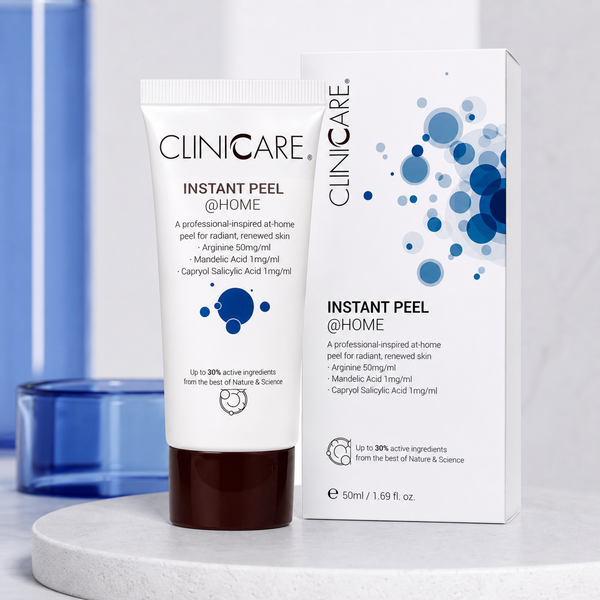 IngredientsWhat Is an At-Home Peel? ClinicCare Instant Peel @ Home, Explained
 Expert GuidesYour Best Anti-Ageing Product Isn't a Serum. It's SPF.
 Skin ConcernsPhyto Corrective with PDRN: How to Calm Redness and Sensitive Skin