

Retinol vs Retinal: How To Use Vitamin A Correctly
Retinol is the most researched ingredient in skincare, but retinal is changing the game. This guide covers the full Vitamin A family, the Crystal Retinal ladder approach, and the exact protocol that gets you results without damaging your barrier.
Retinol is the most researched, most cited and most misused ingredient in skincare. Dermatologists have recommended it for decades. Clinical trials have validated it consistently. And yet, for every person who builds a successful retinol routine, there are several more who abandoned it after two weeks of redness and flaking, convinced it was simply not for them.
It was for them. They just started wrong.
This guide covers everything you need to know to use retinol correctly, from the science of why it works to the exact protocol that gives your skin time to build tolerance without compromising your barrier.
What Is Retinol and How Does It Work?
Retinol is a Vitamin A derivative that belongs to the retinoid family. When applied topically, it undergoes a two-step enzymatic conversion in the skin, first to retinaldehyde, then to retinoic acid, which is the biologically active form.
Retinoic acid works by binding to nuclear receptors inside skin cells, directly influencing how those cells behave. The results are well-documented and significant: accelerated cell turnover, stimulated collagen and elastin production, normalised keratinisation, reduced melanin formation, and improved skin texture across all types and tones.
Prescription tretinoin delivers retinoic acid directly, bypassing the conversion steps, which is why it works faster but also why it causes more initial irritation. Over-the-counter retinol goes through that conversion process, making it gentler and better suited to long-term, independent use.
Retinal vs Retinol: One Step Closer to Active
Retinal, short for retinaldehyde, is the next generation of over-the-counter Vitamin A. If retinol is two steps away from the active form (retinol → retinal → retinoic acid), then retinal is only one step away. It requires just a single enzymatic conversion before it can get to work inside the skin cell.
That one fewer conversion step is not a small distinction. It means retinal acts significantly faster and at greater potency than equivalent concentrations of retinol, delivering results that approach prescription-strength retinoic acid, without requiring a prescription.
Retinal also delivers all the same benefits as retinol, accelerated cell turnover, increased collagen synthesis, reduced pigmentation and improved texture, but on a shorter timeline. The trade-off is that it requires the same careful introduction protocol. Retinal is not a beginner formula; approach it as you would a higher-strength retinol.
The Crystal Retinal Ladder: A Structured Approach to Vitamin A
Medik8's Crystal Retinal range is the most considered Vitamin A ladder available without a prescription. The concept is straightforward: rather than guessing at a strength, you start at the level appropriate for your skin and progress upward only once full tolerance has been established.

What makes Crystal Retinal particularly effective is the encapsulation technology. The retinal molecule is surrounded by a protective crystal shell that keeps it stable during formulation and on the shelf. When applied to skin, the warmth of the skin gradually dissolves the crystal, releasing the retinal slowly over time. This controlled release significantly reduces the likelihood of redness and irritation, meaning you get the potency of retinal with improved tolerability.
The Five Strengths Explained
- Crystal Retinal 1, For very sensitive skin or absolute beginners to Vitamin A. A gentle introduction that still delivers meaningful results. Start here if your skin reacts easily to any actives.
- Crystal Retinal 3, The recommended starting point for most people. Suitable for beginners to retinal who may already have some retinol experience. Delivers noticeable results within 8-12 weeks of consistent use.
- Crystal Retinal 6, For those who have built full tolerance at Crystal Retinal 3. A mid-level strength suitable for addressing established fine lines, pigmentation and uneven texture.
- Crystal Retinal 10, Advanced strength. For experienced Vitamin A users with a well-established tolerance. Approaches the results territory of prescription retinoids.
- Crystal Retinal 20, The strongest level in the range and the closest to prescription performance available without a prescription. Typically reserved for clinic use or highly experienced users under professional guidance.
Medik8 recommends pairing Crystal Retinal with C-Tetra Vitamin C, C-Tetra Original (for strengths 1 to 3) or C-Tetra Luxe (for strengths 6 to 10). Used in the morning, the antioxidant activity of Vitamin C complements the overnight cell renewal triggered by retinal, creating a more comprehensive anti-ageing programme across the full 24-hour cycle.
The Most Common Beginner Mistakes
Most people who struggle with retinol make one or more of the following mistakes. Understanding them is half the work.
- Starting with too high a concentration. A 1% retinol product is not a beginner product. Start at 0.025% to 0.1% and build over months, not weeks.
- Using it every night from day one. The skin needs time to upregulate the enzymes that convert retinol. Daily use before tolerance is established leads to barrier damage, not better results.
- Applying it to damp skin. Retinol penetrates more deeply on wet skin, increasing irritation. Always apply to clean, dry skin, or use the sandwich method if sensitivity is a concern.
- Mixing retinol with AHAs, BHAs or Vitamin C in the same step. These combinations can push skin pH too far and compromise the barrier. Use actives on alternating nights or separate morning and evening routines.
- Skipping SPF. Retinol increases photosensitivity. Not wearing broad-spectrum SPF during retinol use is genuinely counterproductive, you are accelerating the very damage you are trying to reverse.
How Often Should You Use Retinol?
The answer depends entirely on where you are in the tolerance-building process. The following protocol is used by skincare professionals and has a strong clinical basis.
- Weeks 1-2: Apply once per week on a consistent evening. Note any reaction.
- Weeks 3-4: If no significant redness or peeling, increase to twice per week.
- Weeks 5-8: With continued tolerance, move to every other night.
- Week 9 onwards: If your skin has fully adjusted with no ongoing irritation, nightly use is appropriate.
Purging vs. Irritation: Understanding the Difference
One of the most important distinctions when starting retinol is understanding whether your skin is purging or reacting with genuine irritation. They look and feel different, and they require very different responses.
Purging occurs because retinol dramatically speeds up cell turnover. Congestion that was sitting below the surface, microcomedones that would have appeared in weeks or months, is pushed to the surface faster. Purging looks like increased breakouts in the same areas where you typically experience congestion. It typically peaks at four to six weeks and resolves on its own.
Irritation is different. It presents as immediate or near-immediate redness, burning, flaking and stinging that is not concentrated in breakout-prone areas. It is diffuse rather than localised. Irritation means your skin is reacting to the retinol itself, either because you introduced it too quickly, the concentration is too high, or you have a sensitivity.

How to Layer Retinol Correctly
Layering order matters with retinol, and there are two main approaches depending on your skin's current tolerance.
The Direct Application Method
For skin that has built retinol tolerance: cleanse, allow skin to dry fully (10 minutes), apply retinol, then follow with moisturiser. This is the standard protocol for maintained, tolerant skin.
The Sandwich Method
For sensitive skin or those new to retinol: apply a layer of plain moisturiser first, then retinol, then seal with another layer of moisturiser. The moisturiser buffer slows absorption, reducing irritation without eliminating efficacy. This is not a long-term strategy, it is a bridge while your skin builds tolerance.
SPF Is Non-Negotiable With Retinol
Retinol increases the skin's sensitivity to UV radiation in two ways: it accelerates cell turnover, which means newer, less UV-hardened cells are closer to the surface; and it temporarily reduces the skin's natural photoprotective mechanisms.
This is not a reason to avoid retinol. It is a reason to make SPF30 or higher a non-negotiable daily step. Broad-spectrum sun protection used consistently does not diminish retinol results, it protects them.
Building Tolerance Over Time
The skin's tolerance to retinol is not a fixed characteristic, it is something you build through consistent, careful exposure. The enzymes required to convert retinol to its active form increase with use. The barrier repair mechanisms that compensate for increased turnover become more efficient. Cells adapt.
This is why the long-term retinol user experiences far fewer side effects than a new user, even at higher concentrations. They did not become immune to retinol, their skin learned how to process it.
Building tolerance requires consistency more than anything. Applying retinol once, stopping for three weeks because of mild peeling, then restarting, this is the most common cycle of failure. The skin never gets the sustained exposure it needs to adapt.
When Should You Stop Using Retinol?
Most temporary reactions, purging, mild flaking, slight sensitivity, resolve with time and do not require stopping. But there are situations where pausing is genuinely the right call:
- If you are pregnant or breastfeeding. All topical retinoids are contraindicated during pregnancy. Consult your GP or dermatologist for safe alternatives.
- If you are undergoing certain cosmetic procedures. Laser treatments, chemical peels and microneedling require a pause period before and after, typically one to two weeks each side.
- If you develop a contact allergic reaction. True allergy to retinol is rare but possible. Symptoms include immediate, diffuse redness, urticaria (hives) or worsening inflammation that does not resolve with reduced frequency.
- If your skin barrier is already compromised. Starting retinol on a damaged barrier is counterproductive. Repair the barrier first with simple, fragrance-free moisturisers, then reintroduce retinol once skin is stable.
Products to Consider
The Vitamin A products stocked at theskinbay range from beginner-friendly retinol formulations to advanced retinal, all expertly curated. Whether you are starting your first retinol routine or ready to step up to Crystal Retinal, the right product is here.
Frequently Asked Questions
Can I use retinol every night from the start?
No. Starting every night is the most common mistake. Begin with once or twice a week for the first four weeks, then increase only when your skin has fully adjusted with no redness or peeling between sessions.
What is the difference between retinol and retinoid?
Retinoid is the umbrella term for all Vitamin A derivatives. Retinol is the most widely available over-the-counter retinoid, it converts to retinoic acid in the skin via a two-step enzymatic process. Prescription tretinoin (retinoic acid) is the active form and is significantly stronger.
Can I use retinol with hyaluronic acid?
Yes. Hyaluronic acid is one of the best partners for retinol. Apply your hyaluronic acid serum to damp skin first to lock in moisture, then layer retinol on top. This reduces the likelihood of dryness and irritation.
Should I use retinol in the morning or evening?
Evening only. Retinol breaks down in UV light and significantly increases photosensitivity. Applying it at night and following with broad-spectrum SPF every morning is non-negotiable.
How long before I see results from retinol?
Clinical studies show measurable changes from twelve weeks of consistent use. Surface texture typically improves within six to eight weeks. Fine lines and deeper concerns take longer, patience and consistency are the key variables.
What does retinol purging look like?
Purging looks like breakouts, whiteheads, blackheads or small papules appearing in areas where you would normally experience congestion. It typically peaks at four to six weeks and resolves on its own. Irritation, by contrast, presents as redness, flaking and burning that appears immediately after application.
What is retinal (retinaldehyde) and how does it differ from retinol?
Retinal (retinaldehyde) is the intermediate step in the Vitamin A conversion chain, sitting between retinol and the fully active form, retinoic acid. Retinol requires a two-step conversion; retinal requires only one. This means retinal is faster-acting and more potent than retinol, delivering results closer to prescription-strength retinoic acid, but without the prescription. It is still available over the counter and is suitable for those who have graduated from standard retinol.
Which Crystal Retinal strength should I start with?
For most people new to retinal, Crystal Retinal 3 is the recommended starting point. If your skin is particularly sensitive or reactive, begin with Crystal Retinal 1 first. The ladder system, 1, 3, 6, 10, 20, is designed so you progress upward only once your skin has fully adapted to your current strength. There is no need to rush; consistent use at the right level delivers excellent results.
Can I use retinal if I have never used retinol before?
Yes, but start at the lowest available strength. Crystal Retinal 1 is specifically formulated for very sensitive or first-time Vitamin A users. Follow the same gradual introduction protocol, once or twice per week for the first four weeks, before increasing frequency. Because retinal is more potent than retinol, it is even more important not to rush the tolerance-building phase.
More from The Bay Blog
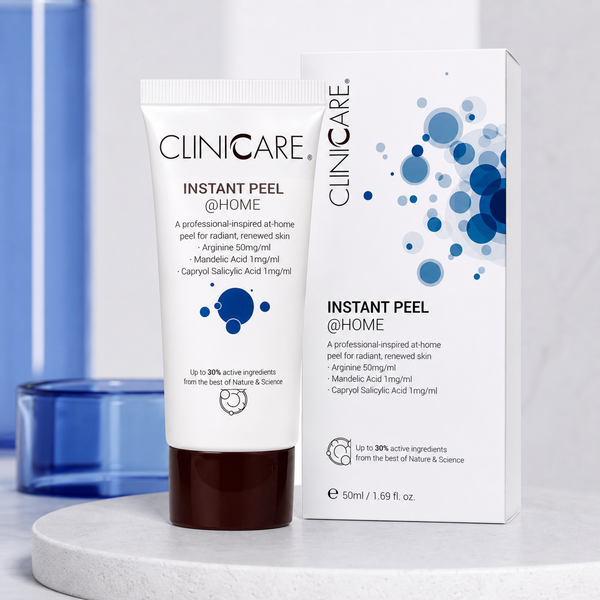 IngredientsWhat Is an At-Home Peel? ClinicCare Instant Peel @ Home, Explained
 Expert GuidesYour Best Anti-Ageing Product Isn't a Serum. It's SPF.
 Skin ConcernsPhyto Corrective with PDRN: How to Calm Redness and Sensitive Skin