

Biohacking Skin Health: Understanding NAD+ At Home
NAD+ is a coenzyme found in every cell of the body and plays a central role in energy metabolism and DNA repair. Here is what the science actually says, and why it matters for your skin.
Biohacking, the practice of using science, data and lifestyle interventions to optimise the body's performance, has moved well beyond Silicon Valley executives and elite athletes. It is now a mainstream conversation in wellness, and at the centre of much of that conversation is a molecule called NAD+.
NAD+ is not a skincare ingredient. It is a coenzyme found in every cell of the human body, and its role is fundamental to how those cells produce energy, repair damage and regulate themselves. Understanding what NAD+ is, and what happens when it declines, offers a different lens through which to think about skin ageing.


What Is NAD+?
NAD+ stands for Nicotinamide Adenine Dinucleotide. It is a coenzyme, a small molecule that helps enzymes carry out their functions, and it is involved in hundreds of metabolic reactions throughout the body.
Its most critical roles fall into two categories. First, it participates in redox reactions in the mitochondria, the process by which cells convert nutrients into ATP (adenosine triphosphate), the molecule that powers essentially every biological function. Second, it acts as a substrate for a class of enzymes called sirtuins and PARPs (poly ADP-ribose polymerases), which are directly involved in DNA repair and gene expression regulation.

NAD+ and the Ageing Process
From approximately the age of thirty, NAD+ levels in human tissue begin a measurable decline. By middle age, studies suggest NAD+ concentrations in many tissues may be half of what they were in youth. This decline is not uniform across all tissues or all individuals, but it is consistent in direction.
The decline appears to have several drivers. DNA damage accumulates with age, activating PARP enzymes that consume NAD+ rapidly in repair processes. The enzymes that synthesise NAD+ become less efficient. Chronic low-grade inflammation (sometimes called inflammaging) places additional metabolic demand on NAD+ pathways.
Research published in the journal Cell has demonstrated that restoring NAD+ levels in aged mice produced measurable improvements in mitochondrial function, muscle performance, energy metabolism and several markers of cellular ageing. This work, led by Professor David Sinclair at Harvard Medical School, has generated significant interest in NAD+ precursors as potential tools in healthspan research.
What Happens to Your Skin as NAD+ Declines?
The skin is the body's largest organ and one of its most metabolically active. Every process that keeps skin looking healthy, collagen synthesis, cellular renewal, UV-induced DNA repair, barrier function maintenance, requires energy and the enzymes that NAD+ supports.
As NAD+ levels fall, several things follow. Cellular energy production becomes less efficient, slowing the renewal processes that keep skin looking fresh and even. DNA repair after UV exposure, a continuous, essential process, becomes slower and less complete. Inflammatory signalling, which NAD+-dependent sirtuins help modulate, becomes less regulated.
The visible outcome of these changes over years is not dramatically different from general skin ageing, fine lines, loss of elasticity, uneven tone, but the underlying driver is cellular energy and repair capacity rather than simple chronological time.

NAD+ Precursors: NMN and NR
NAD+ itself is not efficiently absorbed when taken orally, it is broken down in the digestive tract before reaching the bloodstream in meaningful amounts. Research has therefore focused on its precursors: Nicotinamide Mononucleotide (NMN) and Nicotinamide Riboside (NR), both of which are absorbed and converted to NAD+ through metabolic pathways.
Early human clinical trials have shown that both NMN and NR supplementation can raise blood NAD+ levels. A 2020 study published in Nature Metabolism demonstrated that NMN supplementation in older adults increased NAD+ levels in blood and was well tolerated without significant adverse effects.
The clinical translation of these raised NAD+ levels, whether they produce the cellular benefits observed in animal models, remains an active area of research. The honest answer is that human evidence is encouraging but not yet conclusive.


Lifestyle Factors That Deplete NAD+


Several common lifestyle factors accelerate the depletion of NAD+ beyond normal age-related decline. Understanding these is the foundation of any approach to NAD+ support.
- Chronic UV exposure. UV radiation causes extensive DNA damage, activating PARP enzymes that consume NAD+ rapidly. This is another mechanism through which daily SPF use is protective beyond its cosmetic benefits.
- Alcohol consumption. Alcohol metabolism generates compounds that compete with NAD+ pathways, reducing available NAD+ for other cellular functions.
- Chronic sleep deprivation. NAD+ synthesis and circadian regulation are closely linked. Disrupted sleep consistently impairs NAD+-dependent repair processes.
- Sedentary behaviour. Exercise upregulates NAD+ production through multiple pathways. A sedentary lifestyle removes one of the body's most reliable NAD+ stimuli.
- Poor nutrition. NAD+ is synthesised from dietary precursors including niacin (Vitamin B3), tryptophan and the NMN/NR precursors found in certain foods.

Sleep, Recovery and Cellular Repair

The relationship between sleep and cellular repair is not metaphorical, it is biochemical. During deep sleep phases, growth hormone secretion peaks, cellular repair processes accelerate, and NAD+-dependent enzymes complete DNA repair work that is initiated during daytime exposure.
Seven to nine hours of quality sleep per night is one of the most consistently evidenced interventions for skin health and cellular longevity. The mechanisms run through NAD+ pathways among others. No supplement replaces this.
Nutrition: Supporting NAD+ Through Diet
NAD+ is synthesised from several dietary precursors. Niacin (Vitamin B3) is present in chicken, turkey, salmon, tuna, peanuts and mushrooms. Tryptophan, found in turkey, eggs, cheese and nuts, is another precursor that can enter NAD+ synthesis pathways.
Foods with naturally occurring NMN include edamame, broccoli, cucumber and avocado, though the concentrations are far below supplemental doses. The evidence for dietary NMN raising blood NAD+ significantly is limited. However, ensuring adequate Vitamin B3 intake from diet supports the foundational NAD+ synthesis pathway.
Exercise and NAD+ Production

Exercise is one of the most reliably evidenced natural stimuli for NAD+ production. Both aerobic exercise and resistance training activate AMPK (adenosine monophosphate-activated protein kinase) and increase the activity of NAD+ biosynthesis pathways.
High-intensity interval training (HIIT) appears to be particularly effective at stimulating these pathways, though moderate-intensity sustained exercise also produces meaningful effects. The mechanism involves the increased energetic demand placed on mitochondria during exercise, which drives upregulation of the entire NAD+ synthesis and recycling machinery.

Frequently Asked Questions
What is NAD+?
NAD+ (Nicotinamide Adenine Dinucleotide) is a coenzyme found in every living cell. It plays a central role in redox reactions that power cellular energy production (via the mitochondria) and acts as a substrate for enzymes involved in DNA repair and gene expression regulation.
How does NAD+ decline affect the skin specifically?
As NAD+ levels fall with age, the cellular processes it supports become less efficient. This includes collagen synthesis, DNA repair after UV exposure, mitochondrial function and the regulation of inflammatory pathways. The cumulative effect is slower cellular renewal, reduced elasticity and less efficient barrier function.
What are NMN and NR?
Nicotinamide Mononucleotide (NMN) and Nicotinamide Riboside (NR) are precursors to NAD+, compounds that the body converts to NAD+ through metabolic pathways. They are available as supplements and have been shown in early research to raise NAD+ levels.
Is NAD+ the same as niacinamide?
They are related but different. Niacinamide is a form of Vitamin B3 (niacin) and is a metabolic precursor that can enter NAD+ synthesis pathways. Topical niacinamide in skincare does not directly raise cellular NAD+ levels, but it supports several of the same skin functions through different mechanisms.
Can I use NAD+ intravenously at home?
NAD+ IV therapy requires medical supervision and is administered in clinical settings. At-home wellness approaches include NMN and NR oral supplements, and injectable NAD+ precursors that are available through medically supervised home programmes. Always consult a healthcare professional before beginning any supplementation protocol.
More from The Bay Blog
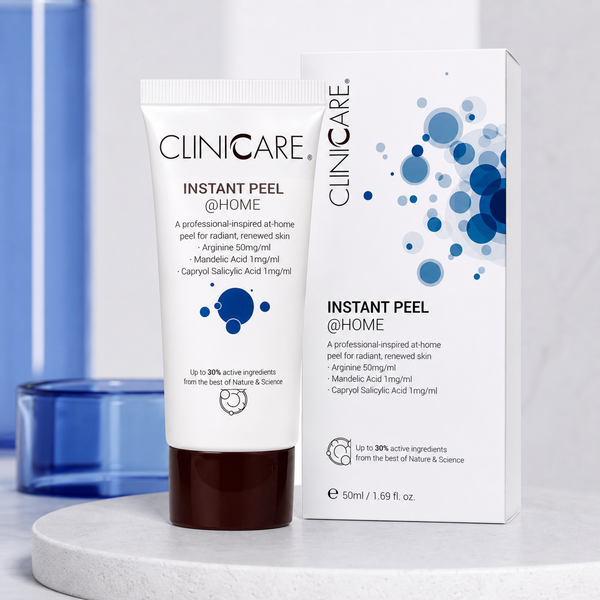 IngredientsWhat Is an At-Home Peel? ClinicCare Instant Peel @ Home, Explained
 Expert GuidesYour Best Anti-Ageing Product Isn't a Serum. It's SPF.
 Skin ConcernsPhyto Corrective with PDRN: How to Calm Redness and Sensitive Skin